

Automatic Winding Binging Machine
Why choose us?
Your Leading Automatic Winding Binging Machine Supplier
Rich Experience
Based on years of experience in equipment research and development and manufacturing in the industry, we customize and design special equipment and production lines according to the special process requirements of users.
One-stop Solution
A high-tech enterprise specializing in R&D, manufacturingimprovement and innovation of cable equipment.
Professional Team
The company has a number of technical professionals who have beenengaged in the cable equipment industry for a long time. Throughsuperb technology and unremitting efforts, we can provide you withperfect services.
Quality Service
Timely and effective after-sales support makes your cooperation worry-free. The after-sales service center has a professional after-sales service team and a professional technical support team to provide users with solutions.
-
 Automatic Winding And Binding MachineThis semi-automatic cable tie winding machine is suitable for processing USB cables, headphoneAdd to Inquiry
 -
 Automatic Bag Tying MachineAdjustable knot diameters range from 1/8 to 1 3/8, allowing this machine to be used on a variety ofAdd to Inquiry
 -
 Bundling Bobbin Coil Winding MachineA bundled bobbin winding machine is a device specifically designed to wind a coil onto a bobbin. ItAdd to Inquiry
 -
 Automatic Nylon Tie Making MachineThe automatic nylon cable tie making machine is an automated equipment specially used for producingAdd to Inquiry
 -
 Automatic Wire Tying MachineThis wrapping machine can wrap coils with various materials, such as laminating or moisture-proofAdd to Inquiry
 -
 Semi-automatic Winding And Tie MachineThe equipment uses plastic-coated core wire, which is suitable for cable tie bundling of variousAdd to Inquiry
 -
 Wire Coil Packing MachineVertical coil packaging machine is mainly used to pack various plastic coils, copper coils,Add to Inquiry
 -
 Binding Wire Packing MachineBinding wire packing machine is a kind of mechanical equipment specially used for packing andAdd to Inquiry
 -
 Automatic Twist Tie MachineThe automatic cable tie machine is a sophisticated piece of equipment that has revolutionized theAdd to Inquiry
 -
 Manual Wire FeedingMainly used for winding cable ties for power cables, USB cables and data cables; the cable ties areAdd to Inquiry
 -
 Automatic Wire FeedingMainly used for winding cable ties of power cable, USB cable and data cable; cable ties are ironAdd to Inquiry


- Tel: +86-571-85146715
- Fax: +86-571-85146970
- Email: shao@jinlaier.com
- Add: No.2031, Moganshan Road, Liangzhu Street, Yuhang District, Hangzhou City, Zhejiang Province
What is Automatic Winding Binging Machine
An "Automatic Winding Binding Machine" is a machine that automatically winds and binds materials like paper or fabric together, typically using a coil or wire binding mechanism, essentially automating the process of punching holes in the material and inserting a coil to create a bound document or book; it eliminates manual labor and produces consistent results quickly
Advantages of Automatic Winding Binging Machine
An automatic winding binding machine offers several advantages including significantly increased production speed, consistent quality, reduced labor costs, versatility in binding different document sizes, ease of operation, minimal errors due to automation, and the ability to handle large volumes efficiently, making it ideal for high-volume binding projects in businesses and print shops.

High Production Speed
Automatic machines can bind a large number of documents in a short period, drastically increasing productivity compared to manual binding methods.

Consistent Quality
Automated binding ensures uniform binding quality across all documents, minimizing inconsistencies caused by human error.

Reduced Labor Costs
By automating the binding process, the need for manual labor is significantly reduced, leading to lower operational costs.
Versatility
Most automatic binding machines can handle a variety of document sizes and binding styles, allowing flexibility for different projects.

Easy Operation
User-friendly interfaces and automated functions make operating the machine simple, even for less experienced users.

Minimal Errors
Automation minimizes the potential for human errors like misalignment or incorrect binding.
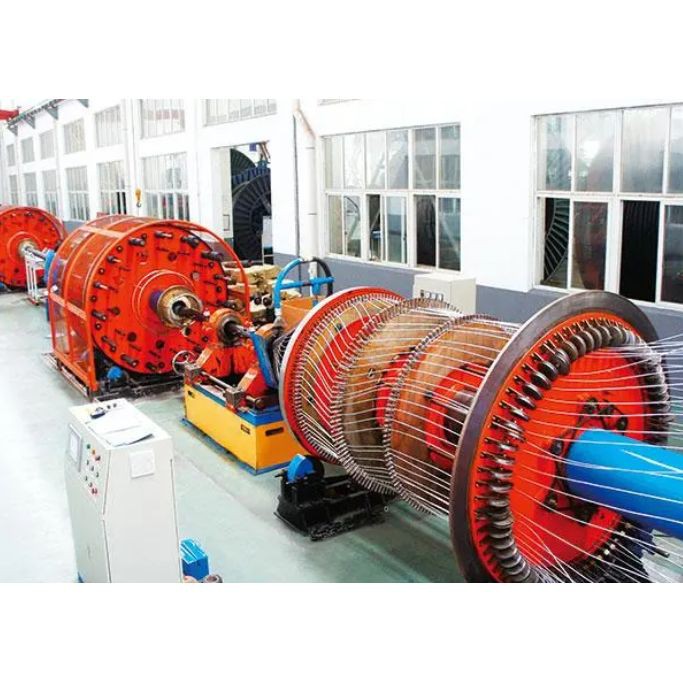
Large Volume Capability
Automatic binding machines are designed to handle large volumes of documents efficiently, suitable for high-demand environments.

Improved Accuracy
Precise control over the binding process ensures accurate placement of coils or wires.

Time Saving
By eliminating manual steps, automatic binding machines significantly reduce the time needed to complete a binding project.
Material of Automatic Winding Binging Machine
Metal materials
used to manufacture key parts such as machine frames, gears, bearings, etc. Commonly used metal materials include steel, aluminum alloy, etc., which have high strength, wear resistance and good processing performance.
01
Plastic materials
used to manufacture non-load-bearing parts such as machine housings, panels, buttons, etc. Commonly used plastic materials include ABS, PC, etc., which have good impact resistance, corrosion resistance and beautiful appearance.
02
Electronic components
used to control the operation of the machine, including sensors, controllers, circuit boards, etc. These components are usually made of silicon, copper, plastic and other materials.
03
Rubber materials
used to manufacture parts that require elasticity such as seals and gaskets of the machine. Commonly used rubber materials include nitrile rubber, silicone rubber, etc., which have good elasticity and aging resistance.
04
Textile materials:
used to manufacture conveyor belts, filter screens and other parts of the machine. Commonly used textile materials include nylon, polyester, etc., which have good wear resistance and breathability.
05
Application of Automatic Winding Binging Machine

Cable harnessing: Winding and securing multiple wires together in a cable harness for applications like automotive wiring, appliances, and industrial machinery.
Power cords: Neatly winding and binding AC power cords for electronics and appliances.
Data cables: Organizing and securing data cables like USB, HDMI, or network cables.
Medical wires: Binding medical device wires to maintain proper organization and prevent tangling.
Industrial wire bundles: Tying together large bundles of wires in industrial applications.
How to maintain Automatic Winding Binging Machine
Cleaning:
Wipe down the exterior with a soft, dry cloth.
Use compressed air to blow out dust from internal components.
Regularly empty the chip tray to prevent paper buildup.
Lubrication:
Apply the recommended lubricant to moving parts like gears and punch pins to reduce friction and wear.
Check the manufacturer's guide for proper lubrication points and frequency.
Inspection:
Visually check for signs of wear and tear on all parts, including belts, rollers, and punching dies.
Ensure all screws and fasteners are tightened securely.
Check alignment of the punching mechanism to ensure accurate hole placement.
Die Maintenance:
Regularly inspect the punching dies for sharpness and damage.
Consider replacing dull or damaged dies to maintain clean punches.
Paper Handling:
Use paper sizes and weights within the machine's capacity to prevent jams.
Properly align paper before punching to avoid crooked holes.
Professional Servicing:
Schedule periodic maintenance by a qualified technician for a thorough inspection, cleaning, and calibration.

Our factory


Our Certificate

FAQS
Q: What is a coil binding machine?
A: COIL BINDING machines, sometimes referred to as SPIRAL BINDING machines, are easy to operate and provide you with a great looking bound document. You can choose from manual punching and binding machines, or manual punching and electric coil inserting machines, or both electric punching and coil inserting machines.
Q: What are the functions of a binding machine?
A: A binding machine is used to bind a range of papers which includes documents, manuals, quotations, brochures and much more. Using a binder helps to handle in-house printing of a company, instead of paying to outsource the work to another firm
Q: Where can I use a binding machine?
A: Crafters can find a multitude of uses for a comb-binding machine, such as assembling photo albums and scrapbooks. Businesses can bind reports and marketing materials. Comb binding machines can even be used by schools and churches.
Q: What is a cable winding machine?
A: A cable winding machine are indispensable for winding cables quick and efficiently. With such a machine – manual, semi-automatic or automatic – you save on labour and time, and therefore on costs.
Q: What are the types of winding machine?
A: There are two types of winding machines to wind the yarn in cone or cheese form. These are: drum winding machines. precision winding machines.
Q: What are the objectives of a winding machine?
A: To transfer yarn from one package to another package. To remove faults like hairiness, neps, slubs, foreign matters. Improve the quality of yarn. Reduce the end breakage.
Q: What are the features of automatic winding machine?
A: Automatic winding machine to introduce below what are its main advantages: Electro-magnetic tension control system, a frequency-alternate slotted spool yarn guide device, and a pump-primarily based totally cycling-type oiling tool ensure the package of yarns. You will have good packages by using auto winding machine.
Q: What are the advantages of winding machine?
A: Automated winding eliminates the need for labor-intensive manual winding. Enables mass production with minimal labor, reducing errors. A cost-friendly alternative to manual labor without compromising on quality.
Q: What are the requirements for winding?
A: Easy unwinding: Yarn to be wound so that it can be unwound easily. Suitable size and shape of the package: Size and shape should be proper. Economical condition: The package size should be controlled the particular economic requirements. Avoid excess loosened and tightness: Should be taken care.
Q: What are the objectives of winding machine?
A: A modern winding machine can process yarns ranging from a count of Ne 2 to finer ones, at a winding speed of 400 to 2000 m/min. Winding is more than just transferring yarn from one package to another. Further functions of winding are to check the yarn and to eliminate any faults found.
Q: What are the main equipment used for winding?
A: The equipment mainly includes a parallel winding machine, ring winding machine, stator, and rotor winding machine, textile winding machine, voice coil winding machine, etc.
Q: What are the principles of winding machine?
A: The working principle of the winding machine is to change the package and increase the yarn package Increase the yarn capacity and remove the defects on the yarn to improve the quality of the yarn. The main task of the winder is to wind and connect the bobbins with less capacity.
Q: What is the material used for winding machine?
A: The main reason for using copper is because of its high electrical conductivity. So the use of this metal (Cu) as compared to other types of metals is more because it improves energy efficiency for motors. Thus enameled copper wire is used for generator, motor winding, and field windings
Q: What are the most commonly used materials for windings?
A: Copper is the most common magnet wire choice due to its high conductivity and relatively low cost. For most motors, like the one shown below, we use copper with a thin enamel coating. We tightly wrap the wire to create the winding that will build the electromagnetic field to drive the motor
As one of the most professional automatic winding binging machine manufacturers and suppliers in China, we're featured by quality products and good service. Please rest assured to wholesale durable automatic winding binging machine at competitive price from our factory.
winding binging machine, Automatic Winding Binging Machine, Manual Wire Feeding