

Automatic Loop Forming Coiling / Wrapping Machine
Why choose us?
When you choose our Automatic Loop Forming Coiling Machine, you can be assured of quality, durability, efficiency, and customer satisfaction. We are a reputable manufacturer of wire and cable processing machines, with many years of experience in the industry. We have employed skilled engineers and technicians who work hard to ensure that our products meet the highest standards of quality.
Rich Experience
Based on years of experience in equipment research and development and manufacturing in the industry, we customize and design special equipment and production lines according to the special process requirements of users.
One-stop Solution
A high-tech enterprise specializing in R&D, manufacturingimprovement and innovation of cable equipment.
Professional Team
The company has a number of technical professionals who have beenengaged in the cable equipment industry for a long time. Throughsuperb technology and unremitting efforts, we can provide you withperfect services.
Quality Service
Timely and effective after-sales support makes your cooperation worry-free. The after-sales service center has a professional after-sales service team and a professional technical support team to provide users with solutions.
-
 Automatic Loop Forming Coiling MachineMainly used for high-speed automatic looping of various wires and cables; using servo motor wiringAdd to Inquiry
 -
 Automatic Wrapping MachineMainly used for wrapping wrapping film of soft and hard round wire and flat wire after coiling; theAdd to Inquiry
 -
 Loop Forming and Wrapping and Tie Up All-in-one MachineMainly used for BV, BVR, RV, RVV and other cables to complete the looping, coating (film wrapping),Add to Inquiry
 -
 Not Tie UpIt is mainly used for high-speed automatic looping and film wrapping of various wires and cables atAdd to Inquiry
 -
 Double Automatic Loop Forming Coiling MachineIt is mainly used for high-speed automatic looping of various wires and cables; the servo motorAdd to Inquiry
 -
 Cuffs Type Heating Shrinking MachineIt is mainly used for automatic looping, cable ties, thermoplastic wrapping of all kinds of wiresAdd to Inquiry


- Tel: +86-571-85146715
- Fax: +86-571-85146970
- Email: shao@jinlaier.com
- Add: No.2031, Moganshan Road, Liangzhu Street, Yuhang District, Hangzhou City, Zhejiang Province
What is Automatic Loop Forming Coiling
"Automatic loop forming coiling" refers to a manufacturing process where a machine automatically creates loops or coils in a wire or strip material, typically using a CNC controlled system to precisely form the loops with consistent size and shape, often used in applications like spring making, wire harnessing, and coil winding for motors or transformers; essentially, it's a automated method to form continuous loops in a material without manual intervention.
Advantages of Automatic Loop Forming Coiling

High Production Efficiency
Automated machines can coil significantly faster than manual methods, leading to higher production volumes in a shorter time frame.

Consistent Quality
Precise control over parameters like wire tension and coil pitch ensures consistent coil quality with minimal variations between units.

Reduced Labor Costs
Automation significantly reduces the need for manual labor, leading to lower production costs.

Flexibility
Most automatic coiling machines can be easily programmed to create a wide range of coil shapes and sizes, accommodating various design requirements.

Improved Quality Control
Automated monitoring systems detect and flag potential defects during the coiling process, enabling immediate adjustments and minimizing scrap rates.

Safety Enhancements
Automated systems can incorporate safety features like guarding and emergency stops to protect operators.
Automatic coiling application
Heat exchangers
Creating coils with multiple loops to maximize heat transfer surface area.
01
Spring design
Incorporating loops into springs for specific load characteristics.
02
Wire mesh production
Forming intricate wire mesh patterns with looped wire.
03
Medical devices
Creating coils for stents and other implantable devices.
04
Decorative elements
Forming ornamental coils with unique loop designs.
05
Application of Automatic Loop Forming Coiling

Wire harnesses:
Creating loops for connecting wires within complex electrical systems in automobiles, appliances, and industrial equipment.
Medical devices:
Forming precise loops in catheters, guidewires, and other medical implants for accurate placement within the body.
Automotive components:
Producing loops for suspension systems, brake lines, and other undercarriage components.
Industrial machinery:
Forming loops in conveyor belts, lifting mechanisms, and other industrial equipment.
Electronics manufacturing:
Creating loops for wire connections in circuit boards and electronic components.
Cable management
Forming loops to neatly organize and secure cables in various applications.
Components of Automatic Loop Forming Coiling
Breakdown of components
Wire
The metal wire that is fed into the machine to be coiled, usually made of materials like steel or copper depending on the application.
Wire Straightener
Straightens out any kinks or bends in the wire before it enters the coiling process.
Wire Feed Mechanism
A mechanism that precisely feeds the wire from the spool into the coiling point.
Coiling Point
The critical component where the wire is deflected to form a loop, determining the coil's pitch and diameter.
Arbor (Mandrel)

Maintenance Tips for Automatic Loop Forming Coiling

Key Maintenance Areas:
Wire Feed System:
Clean the feed rollers: Regularly remove any dirt or debris buildup on the rollers to ensure smooth wire feeding.
Check for wire alignment: Ensure the wire is properly aligned with the feed rollers to prevent misfeeding and damage.
Inspect the wire straightening mechanism: Check for wear on straightening rollers and adjust as needed.
Forming Dies:
Inspect die surfaces: Regularly check for wear, damage, or burrs on the die surfaces, and replace or recondition them as necessary.
Proper die selection: Use the correct dies for the wire size and desired loop shape to minimize stress on the machine.
Die alignment: Ensure proper alignment of the forming dies to prevent uneven loops.
Tensioning Mechanism:
Check tension settings: Regularly monitor and adjust tension settings to maintain consistent loop formation.
nspect tensioning belts and pulleys: Check for wear and replace if necessary.
Lubrication::
Regular lubrication: Apply appropriate lubricant to moving parts like bearings, gears, and slides according to the manufacturer's schedule.
Grease points: Identify and properly grease all designated grease points on the machine.


Other Components:
Check for loose components: Regularly tighten any loose screws, bolts, or connections.
Hydraulic system: Monitor hydraulic fluid levels and pressure, ensure proper functioning of hydraulic components.
Electrical connections: Inspect all electrical connections for wear or damage, tighten as needed.
Important Maintenance Practices:
Regular Inspections:
Perform daily, weekly, and monthly inspections to identify potential issues early.
Cleaning Routine:
Regularly clean the machine, especially areas prone to debris buildup like the wire feed path and forming dies.
Operator Training:
Ensure operators are properly trained on machine operation and maintenance procedures.
Preventative Maintenance:
Follow the manufacturer's recommended maintenance schedule, including replacing worn parts before they cause major issues.
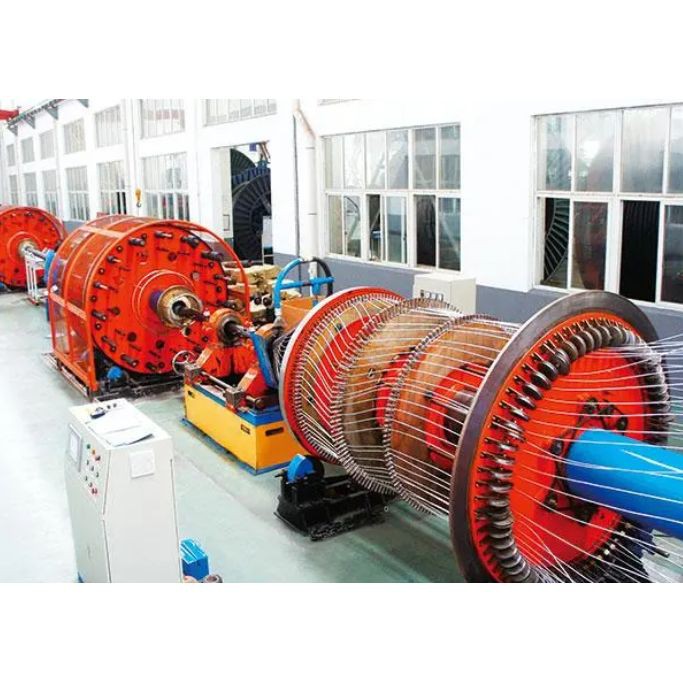
Our factory


Our Certification

FAQS
Q: How does a coiling machine work?
A: A CNC spring coiling machine works by feeding a wire through a series of rollers and then coiling it into the desired shape. The operator inputs the desired specifications into the machine's computer system, which controls the tension and feed rate of the wire to ensure consistent spring dimensions.
Q: What is the process of coiling?
A: The coiling process causes stress in the wire, which is alleviated by heat treatment. The spring is heated in an oven for a specific amount of time at a set temperature and then placed aside to cool slowly.
Q: What is coiling used for?
A: Coiling, also called endovascular coiling, coil placement, or coil embolization, treats brain aneurysms. Unlike traditional clipping, coiling doesn't require an incision in the skull. Instead, your doctor threads a catheter from a blood vessel in the groin up into the blood vessels in the brain.
Q: What are the two types of coiling?
A: Complete answer: There are two types of coiling namely plectonemic and paranemic coiling. Plectonemic coiling is a type of coiling where two strands of chromatin coil with each other very tightly.
Q: Why is coiling important?
A: Healthcare providers mainly use coiling to treat a cerebral aneurysm at risk for rupturing. In some cases, they may use it to fix a ruptured aneurysm. There may be other reasons for your healthcare provider to advise a coiling procedure.
Q: Why is coil so important?
A: An ignition coil is an essential component in the ignition system of internal combustion engines. Its primary function is to transform the low voltage from the battery into the high voltage needed to create a spark at the tip of the spark plug.
As one of the most professional automatic loop forming coiling / wrapping machine manufacturers and suppliers in China, we're featured by quality products and good service. Please rest assured to wholesale durable automatic loop forming coiling / wrapping machine at competitive price from our factory.
Automatic Wrapping Machine, Cuffs Type Heating Shrinking Machine, Double Automatic Loop Forming Coiling Machine